+of+DSCN4615+copy2.jpg)
My parents have made certain investments that I knew of, both in mine and their lives. Cars are one. The few that they bought have served our family for close to decades; education, no doubt..
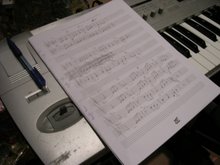
But there is no one investment they made that could beat the piano that they bought many years ago. It's a Young Chang piano, Korean imported. It would never produce the quality of the tone as fantastic as a Petrof or Yamaha, but it's still a very fine piano alright.
First time I sat on the piano chair, I was 3. All I could remember about those days were how I'd just randomly hit the keys and laugh to myself at the funny and weird sound it made. My legs were way too short back to touch the floor back then, so I'd sit with my whole buttock on the chair and let both legs dangle in mid air. After all, I hadn't much use of the pedals anyway.
The piano was my imagination. After watching Disney cartoons, I'd walk back up to the piano and play the songs I heard. Aladdin, Beauty and the Beast, and Pocahontas were my favourites. And as I played, I would imagine myself as the prince saving the beautiful princess, or be the little soldier in the movie fighting his way past evil monsters to get to the castle where the sleeping beauty slept.
Growing older, when imaginations of rescuing princesses faded and realities started sinking in, I still imagined myself as a little conductor, orchestrating a masterpiece for the movie makers. Playing on the high-pitched keys were like flutes, trumpets, strings, melodious and sweet; low-pitched notes sounded like trombones, bass, percussions, evil, dark, dangerous. It was a little child's imagination that kept that black shiny piano in my home always working, and it was a simple piano that painted my life with many beautiful colours.
Having such privilege of growing up in the world of music and sounds, I now realized that my piano actually taught me more than just music lessons. For one, the piano made me realize how much my parents mean to me. Back when my dad was still working, he could afford to send me for music lessons and exams. My last exam was the Trinity diploma. On payment day, I was with my mother in my lecturer's office when she took out a wad of cash and counted it in front of my huge eyes as she passed it to the teacher. Driving away from the music school, all that my mom said was, practice hard and don't waste our money, ok?
I was 14 back then. Money was no longer something that was so casual-looking like water or paper. I was old enough to understand how hard it was for my dad to earn every dollar, especially after being in his lab before and seeing what he has to do each day. For the first time in my life, I got serious about what I was doing. It was an examination alright, and I had to do well.
In the months that led to the exam, I would occasionally wake up from nightmares of failing my diploma test. It wasn't a nice feeling, and it was no fun. Dreams have always been something very real to me, and in those few dreams I remembered waking up to, I always woke up with sweat dropping from my temple and eyes moist and red.
God, please don't let me fail. Please.
I could say that it wasn't those nightmares that kept me practicing even when my hands were sore and the blisters popped all over my fingertips. Maybe it was the fear of not passing, but I couldn't fail as long as my parents were paying. I could not allow myself to let them down, neither could I afford to waste the money that they spent on me.
Now as I write, I look back on those many hours spent with the piano. Sacrificing time to myself, effort and energy, I realized all that I did and all that I earned wasn't for my own self. It was an act of love for my parents. As much as they coughed out that colossal sum of money for my exam and classes out of love, it was just the only way I could have showed them that I love them too. No way I could actually repay their love. It sounds ridiculous even to think of paying them back for all the sleepless nights they went through and all the tears and blood poured out for a son who brought so much pain to them.
Eventually, by God's grace, I passed my piano exam. Though I never verbalized it, though they congratulated me and heaped me with praises, the one thing that I wished I told them earlier on before they gave me the credit for working hard, was this:
It's not about me, it's the both of you. It's your credit, it's your achievement.
Once in a while I will still go home when I'm fed-up of life in college. But there too will be the days when I wished I never did go home. Home now reminds me of all that my dad still has to go through to put bread on our table. Now working private, he works odd hours, travelling from state to state in a truck, works overtime and sometimes have to go back to the factory in the middle of the night to load goods off lorries.
And one night, while waiting for my dad to come home, I cried thinking of how he still has to struggle for us. God, why do you let all these still happen to my dad? It's never fair, and life's never going to be fair. It's always my dad that suffers first from the government, and now the private work, how about later?
He came back at 3am, tired, in pain from loading the goods - 15 tonnes of fertilizer bags - and soaked in his own sweat. He went to take a bath, and coming out, while getting ready to sleep, I hugged him as usual.
Papa, I'm sorry, I blurted.
My dad was perplexed. Sorry for what?
And I walked out of the room. I turned away, not because I didn't have an answer, but because I didn't him to see me cry again. I'm sorry for not being able to help you. I'm sorry that I'm the reason why you still have to suffer so much. I'm sorry that I would never be able to take care of you and mummy yet. Just give me a few more years, a few more years and I promise things will change for the better. But for now, I'm so sorry.
Crying myself to sleep, it somehow dawned to me that if only things weren't the way it is now, I would never be able to keep pushing myself to do better, and work harder for a better tomorrow. But I must say, that these love and struggles that I could relate to, all started the very day my parents bought the piano. It was God's magical way of showing me who really matters to me, and led me to understand that all I did was not for myself, but for them. The piano reminded me, that some things in life are just worth investing in. Or should I simply say that my parents never really did invest in a piano, they invested into me and my brother. That's the greatest investment they ever made.
Thursday, June 5, 2008


Saturday, April 5, 2008
I'm Reminded
Last night after dinner, was walking out from the coffee shop when something - or someone, better said - caught my eyes.
A little girl beside her mother on a table not too far away. Her eyes were glued to the small empty bowl in front of her. She looked hungry.
The mother had a big bowl of noodles. Pushing the bowl gently to the empty bowl, she carefully picked noodles out from her bowl and filled the empty bowl. Then the soup, spoon by spoon, one by one, until the noodles were semi floating in the soup.
I stood there for a long time. A real long time. The girl tilted her head as she saw the noodles poured into her bowl, and once done, her eyes lit up as the bowl was pushed in front of her. Fumbling over the excessively long chopsticks that her little fingers struggled to grasp, she ate away happily.
It was, to me, more than just a mere show of affection or love of a mother. It reminded me of my mother.
Back in my kindergarten days, my mother would took me to this coffee shop that sold soup noodles. She would order a normal bowl and an empty bowl. When the food arrived, she would dish out half of her noodles and soup into my bowl, and that was breakfast. Along with the noodles would be a cup of ice tea for herself, and a cup of hot milo for the small boy. The shop owner was a nice young lady that had no kids back then. Probably she adored all little children as she would always put a colourful straw and a generous amount of ice cubes on the saucer with it.
One morning, while fumbling over my chopsticks, a thought struck me, and I decided to voice it out.
"Mummy, won't you get hungry if I eat your food?"
My mother smiled, and looked at me. Even then, she already had light wrinkles over by the edge of her eyes, but yet, could never hide the sparkles in her eyes.
I'll never be hungry so long as you're not.
Till this very day, I realized that I will never be hungry, when I'm by my mother's side. Every meal since coming to Shah Alam has never been the same then, and the physical hunger of the tummy would often remind me of the emptiness left in my mother's absence.
Mummy, I miss you, dearly.
But I'm coming home mummy, I'm coming home.
A little girl beside her mother on a table not too far away. Her eyes were glued to the small empty bowl in front of her. She looked hungry.
The mother had a big bowl of noodles. Pushing the bowl gently to the empty bowl, she carefully picked noodles out from her bowl and filled the empty bowl. Then the soup, spoon by spoon, one by one, until the noodles were semi floating in the soup.
I stood there for a long time. A real long time. The girl tilted her head as she saw the noodles poured into her bowl, and once done, her eyes lit up as the bowl was pushed in front of her. Fumbling over the excessively long chopsticks that her little fingers struggled to grasp, she ate away happily.
It was, to me, more than just a mere show of affection or love of a mother. It reminded me of my mother.
Back in my kindergarten days, my mother would took me to this coffee shop that sold soup noodles. She would order a normal bowl and an empty bowl. When the food arrived, she would dish out half of her noodles and soup into my bowl, and that was breakfast. Along with the noodles would be a cup of ice tea for herself, and a cup of hot milo for the small boy. The shop owner was a nice young lady that had no kids back then. Probably she adored all little children as she would always put a colourful straw and a generous amount of ice cubes on the saucer with it.
One morning, while fumbling over my chopsticks, a thought struck me, and I decided to voice it out.
"Mummy, won't you get hungry if I eat your food?"
My mother smiled, and looked at me. Even then, she already had light wrinkles over by the edge of her eyes, but yet, could never hide the sparkles in her eyes.
I'll never be hungry so long as you're not.
Till this very day, I realized that I will never be hungry, when I'm by my mother's side. Every meal since coming to Shah Alam has never been the same then, and the physical hunger of the tummy would often remind me of the emptiness left in my mother's absence.
Mummy, I miss you, dearly.
But I'm coming home mummy, I'm coming home.
Friday, April 4, 2008
Introducing

A New and Uprising Photographer
One that shares a same passion I do in photography
Over the last few months of fooling around with my camera, I finally learned and discovered,
"That a photographer's greatest asset is not the camera, it's the eyes;
most valuable skill is not the clicking of the shutters,
but the vision and desires of the heart"
No use having a great camera without a vision,
and pointless being a photographer with the skills and yet no purpose
but the vision and desires of the heart"
No use having a great camera without a vision,
and pointless being a photographer with the skills and yet no purpose
The following photos are collectively shot by me, her and Mark, a friend that possess greater knowledge and authority with the camera. Do enjoy the pictures.


Thursday, March 27, 2008
Because it Hurts to Speak the Truth
Years of experience with working with people, living with people, being in different levels of relationship, reading socio-political books on policy and decision making of nations, taught me, that sometimes, you don't speak the truth.
Because the truth, could sometimes damage status quo. Status quo could be, you might be at the losing end - or in my case, I would always be at the losing end - but you still don't speak up your frustrations or your anger or your pain because by doing that, you lose the trust that you have, you lose respect, you lose the confidence that people have in you. Thus, you just keep it in you, to prevent further damage or loss, although technically you're already losing most of it.
Because the truth, would mean that you are learning to move on and to get along with the worst of situations and the toughest circumstances. Yes, it's difficult to be always the one running away from the truth; yes, it's never easy to put on a smile while being with people that keep reminding you of the status quo; but yes, it too reminds you that God's still with you, that the same Him that was with Job, the same Him that was with Jesus in the garden, is still with me.
To put it simply, because the truth, all the time, hurts when spoken. The truth itself already hurts, to speak it up hurts even more, and it keeps reminding you of what you're losing, so you just refuse to remind yourself about it.
I, for one, refuse to be hurt anymore. Yet the choice of being hurt, more often than not, was never a choice in the first place.
Just whining over here, do enjoy the next story.
Because the truth, could sometimes damage status quo. Status quo could be, you might be at the losing end - or in my case, I would always be at the losing end - but you still don't speak up your frustrations or your anger or your pain because by doing that, you lose the trust that you have, you lose respect, you lose the confidence that people have in you. Thus, you just keep it in you, to prevent further damage or loss, although technically you're already losing most of it.
Because the truth, would mean that you are learning to move on and to get along with the worst of situations and the toughest circumstances. Yes, it's difficult to be always the one running away from the truth; yes, it's never easy to put on a smile while being with people that keep reminding you of the status quo; but yes, it too reminds you that God's still with you, that the same Him that was with Job, the same Him that was with Jesus in the garden, is still with me.
To put it simply, because the truth, all the time, hurts when spoken. The truth itself already hurts, to speak it up hurts even more, and it keeps reminding you of what you're losing, so you just refuse to remind yourself about it.
I, for one, refuse to be hurt anymore. Yet the choice of being hurt, more often than not, was never a choice in the first place.
Just whining over here, do enjoy the next story.
Friday, March 14, 2008
Just A Wheelchair, Please
 In life, we often come across people that are miserable, unlovable, or people with personalities that no one would ever like or enjoy in company.
I met such a person. He was only a boy back when I first met him, probably 9 years old or so. True, he had a lousy temper, he had a foul mouth, he had almost everything in him that could keep even God away from. Perpetually alone most of the time, he would be all alone on his bed, except for the times he'd go around snooping on what the nurses were doing with the other patients, or when the doctors went along for ward rounds, he'd be dragging himself behind.
And I assure you, it wasn't his unlikable nature that brought unwanted attention to him, it was the fact that he was disabled that made him even more noticeable.
He was crippled. Shriveled feet, an aftermath of the merciless Polio, he would never be able to walk.
When I was first posted to that little health center, the staff were few, and the medical supplies were limited. There was simply not much available for the people over there, and thus we had to make do with whatever little we had. There were times when there were just simply not enough beds for the patients and we had to even drag out the mattresses kept for doctors on call, lay it on makeshift beds by joining tables together, and place patients on the mattress.
Still it wasn't tough with the limitations we had, if compared to the pain we had to bear with that little boy that couldn't walk.
Being rebellious, he would refuse to eat and drink when the food came in early in the morning. He would throw his plate onto the floor, spilling the rice and soup everywhere, creating a huge mess for the nurses to clean up after. And come noon, he'd be so hungry that he would start screaming and whining in pain, begging for food, and when the food come, he'd gobble half of it and the other half would have the same fate as his breakfast.
It became such a routine that the nurses would really dread the morning shift. They would almost do anything to be exempted from that shift just to avoid the mess and the noise.
"Seriously doc," one junior nurse once related, "I'd even give up half of my paid leaves just to get graveyard shifts only."
For a long time - almost 4 months - when I was posted there, I almost believed that the boy was either possessed by some evil spirits, or that he was really sick somewhere. Medical training in school never prepared me to put up with supernatural forces at work, and for the first time I was encountering such a case. I'd pray every morning for God's protection that the spirit would not jump onto me, and that somehow God would rebuke the manifestations of the spirit and cast it out from the boy, but nothing seemed to work.
Until one morning, that redefining morning, I was on call and on going for my morning rounds, when I heard a soft scrapping sound on the floor. Turning behind, there was no one behind me, but a small little shadow at the edge of the wall. Walking back behind the wall, I realized that it was the noisy little boy.
"What're you doing here?"
Nothing, he said. Just taking a stroll. And he sulked.
Well ok, that's fine, I said. Just don't be noisy alright? I'm going to check on some patients. He didn't say anything, eyes wandering, he continued to pout his lips and sulk. Deciding not to interfere with his mood swings anymore, I continued on my rounds.
While checking on a patient, my stethoscope dropped onto the floor. Not being able to bend down to pick it up as I was half way injecting some fluids into a patient, I decided to pick it up later. Done and finished with the injection, I was about to bend down when I realized that it wasn't there anymore.
"Doc."
A small hand held my stethoscope to knee length. It was the little boy, sitting just beside my feet. Kneeling down, my eye reached his eyes, leveled. "Thank you so much," I said softly. He didn't reply, and dragged himself away from where I knelt down, but somehow I noticed that he wasn't sulking as much as before.
Perhaps that little episode I had with the boy started to change the way I looked at him, and prompted me to give myself - and himself - a chance to understand him. That morning itself his temper flared again during breakfast. The nurses held on to his plate of breakfast as he was flinging himself on his bed, throwing his fist swinging it violently in the air while screaming. I signaled the nurses to back down and let me take over.
His hands were still swinging like a mechanical golf stick programmed to keep swinging, and I took my chance by grabbing it firmly, refusing to let go. The boy was startled by the sudden resistance, and looked at what was holding his hand down. His eyes met mine. All I saw through those brown eyes of his, were struggles, fears, anger, frustration that no one saw or heard.
Boy, why are you angry?
His mouth was ajar, and I looked at him with love. My heart, for the first time in my life, reached out to a complete stranger, a patient, a disabled boy. No more was he sulking, and his eyelids dropped a little, revealing his sadness.
Please eat, ok? The nurses spent a lot of time to prepare it, and it's for your own good. Do eat it, ok?
Sounded like I was almost begging him.
The nurse that held on to the plate was clearly stupefied from her expression. I took the plate from her and handed it to the boy. His hands were trembling as he took it from me. Taking his first bite, a drop of tear fell from the corner of his eyes. Then the second drop from the other corner, then the third drop. Sniffing, he lowered his head, refusing me to see the subsequent droplets, and he couldn't take a second bite.
Something deep in me told me, that the ice has either melted, or was broken.
That night, I noticed a very unusual him. Unlike the normal him that would be tossing around bed, sitting up and then lying down, he was hypoactive, and was facing the wall, back towards the nurse counter. The nurses were too busy to notice the difference - except for the reduced noise.
Walking over to his bed, I sat at his side, near the wall. He was sniffing softly, afraid that people would see a boy cry.
It's no shame to cry, little boy. It's no shame.
"My hand hurts," he whispered. A strong Chinese accent, probably a Hokkien judging from the slang.
I took his hands into mine, rubbed it gently. The dirt marks on his hands were obvious, and his palms were rough from the constant dragging himself on the floor. For the second time round in a day, my heart went out to him.
Where's your mom?
My parents left me here. *Sniff* They said that I was cursed, that I was a devil's child to come out like this, that I bring bad luck to them. They didn't want me.
Doesn't matter, ok? Well, you haven't been a bad luck to me yet, have you?
His eyebrows raised a little, and he tilted his head up. But the nurses said I'm naughty... They always scold me, and they say they hate me... I smiled, moved by the manja tone in the small boy.
Hmm... well, it's because you don't eat the food they cook... And you throw them on the floor all the time...
He sat up in his bed. That's because their food taste so yucky! It was a loud whisper, almost shouting despite whispering. Crazy one! No taste at all!! Last time in the orphanage the food there was even better, at least they got sweet, salty, hot... but their one no taste!! How to eat?
I laughed, then he joined me. A big boy and a small kid laughing together in the middle of a quiet night, breaking the tranquility of the night. One laughed at the simplicity of the child, the other one laughed at the reaction of the bigger boy.
Only the nurses sulked in dissatisfaction.
Tell you what, I finally said to the boy, you promise me you eat your breakfast nicely, and I'll see what I can do with your hands, ok?
Promise! The reply came fast. I straightened my little finger in front of him, and he did the same. Both fingers hooked, a sign of a commitment and a promise that things would get better.
After the boy slept, I made a phone call.
"Damn, Jo, it's half past 12.. you'd better make sure it's good," the voice from the other side replied after I introduced myself to the district health officer. He was my senior by 2 years, and rose the ranks much faster than I did.
I related the whole problem to him. About a boy, who was in pain. Who needed to be understood.
"There are going to be a million patients like that every single day Jo, and you going to do the same for all of them?" he yawned, a show of bored and sleepiness.
He is different, I said.
What's so different about him?
I paused for a while, and after a while, I finally said,
"He's going to be a doctor."
The laugh from the other side was hysteric one. And I thought he was half asleep. That woke him up finally, my heart said. "You telling me a lame boy, suffering from Polio, is going to be a doctor in future, right young man?"
That's right sir. You've got the point.
Following a moment of silence, the million dollar question was popped. "What do you want me to do?"
I sighed. A wheelchair for the boy.
And if I don't get him a wheel chair?
I'll make sure you do, coz' if you don't, I'm going to keep calling you every midnight, pay hitmans to go shoot your windows, puncture your car tires, and kidnap your puppies.
"How the hell did you even get your practising license," he protested. Sir, just this one thing that I'm asking for. I've helped you with all your assignments back in college, printed your resume before your interview, and sneaked notes into your exam hall during your finals. Just this one thing, and I promise I'll never bug you again.
I swear.
Please. Just a wheelchair.
It was a long sigh. "You're good in bargaining, young man, you've got a heck skill in that you know." Hanging up the receiver, a long curve was carved from ear to ear.
All I could remember from that moment on, was that this boy got his wheelchair and was racing from one end of the corridor to the other end, and got some of the nurses to even time him to see whether he broke his previous record. I could recall at times whether had I said the right thing about him when I told the district officer that he was going to be a doctor upon seeing his passion in wheelchair racing, and I never knew for a long time, because a few months after the whole thing I was transferred back to Ipoh GH where I finally retired.
For a long while I couldn't remember much about him until the day I retired. It was a small party my department threw for me, and it was the usual KFC in buckets, a frost cake decorated with colouring and flavourings, and a lot of balloons. What a birthday party, I thought.
The party came to an end when a senior nurse placed a laptop in front of me and played a video. "I think this would interest you," she said with a little smile.
The video was an interview. A Dr John Hans, someone I never heard of. He was young, and good looking, and was radiant. He spoke with much confidence and was articulate in his speech. "He's a fine young man," I commented. The nurse nudged me to continue watching on.
As the video slowly progressed, the camera focus was slowly shifted from his face to his chair. Then did I realize that the doctor was sitting on a wheelchair. Curiousity was sparked in me and I thought I could press my ears onto the speakers.
"What inspired you to be a doctor?" the interviewer asked.
He took in a deep breath before beginning his story. A story of how his parents abandoned him when he was 2 years old, how he was absorbed in an orphanage at 3, left all on his own until his polio manifested which took away his mobility, how a health centre took him in and his painful life in the centre.
"I spent almost 10 years of my life in anger. It was, well, the type of frustration that no one could understand me as a kid, or felt the pain I went through as being a crippled boy, or as one that would always be lower than the other people because I was always on the floor..."
The day that changed him was the day one young doctor entered the centre and allowed him to follow him for ward rounds. As he spoke of the rounds he followed behind, his eyes lit up, and his face glowed with so much joy and happiness. He spoke of how he once helped the young doctor to pick up his stethoscope, and how the young doctor once carried him up to show him how a Baker's cyst looked like.
"The one thing I'd always remember about the doctor - even though I could never remember his name - was that one day, where he held my hand in the morning when I was throwing a temper tantrum, and that night itself, where he sat on my bed to talk to me.
"No one in my life back then, had ever sat beside me, and talked to me. But he did. And he smiled at me. He refused to look at me as a crippled, but he looked at me as a boy. He was the only one who treated me like a real person, a human being, and not a medical subject."
Was he the same doctor that got you your wheelchair, the interviewer ask. "Yes! Of course. I had no idea how he did it. I overheard him one night swearing over the phone, scolding and yelling until almost the whole ward woke up (chuckle), I think he was very frustrated as he was demanding for something from someone in power..."
The nurses laughed out loud. That's so you sir! They chimed in harmony. I rolled my eyes and grinned.
"But the one phrase that struck me, was that in his heated conversation with the guy on the other side of the phone, he stopped, and quietly said, 'Just one wheelchair, please.' And I knew for sure, that he was asking that wheelchair for me."
For a moment, I was distracted. Suddenly everything came back so clearly to me. Yes, I was that doctor! I was talking to the district officer, demanding him for the wheelchair. And then I remembered the reason I gave to the DO:
One day, he'll be a doctor too.
"Wrapping up the interview for the day, Dr John, could you share with us some advice for young and aspiring doctors-to-be?"
He smiled. "There are only 2 things that doctor who gave me a wheelchair taught me: To treat a patient and not the illness, and to chase the Giver of my dreams, and not the dreams. You see, the one thing he did for me was not to give me a wheelchair - after all, I could be here even without a wheelchair - but he gave me himself, his everything, his best. He had medical power to elevate the pain of a patient, he had social influence to make that call, and most importantly, he had a heart that loved me enough to care for me, sit beside me, and talk to me.
"And I learned, that you can be a doctor without legs or hands, but it is the heart that brings our hands, our legs, every single limb and muscle in our body together, to make us all the best doctors to our patients. That heart of his showed me, that the destination of a medical career is not a certificate or curing a disease, but to draw a smile on the face of a patient that was once crying, and to stitch up wounds that never met the eyes."
"That's the true calling and meaning of the medical profession. Thank you doc, for showing me how to be a doctor to the patients."

"You're never alone"
Wednesday, March 5, 2008


Subscribe to:
Posts (Atom)